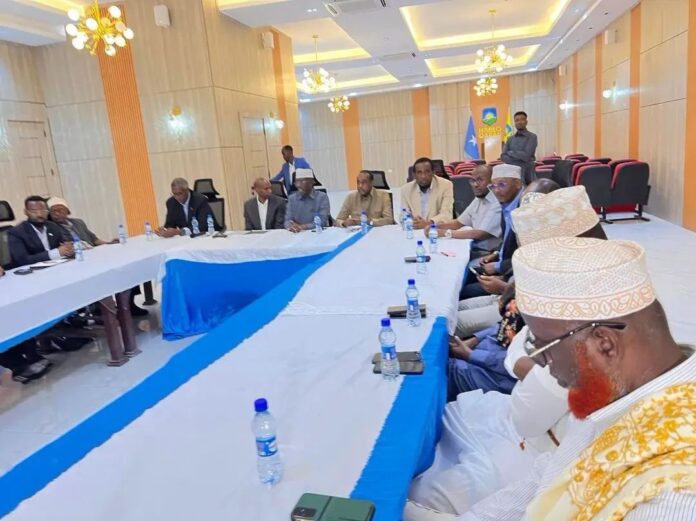
A high-level meeting between Somali opposition leaders and influential traditional elders from the Hawiye clan has kicked off in the capital as the nation inches toward a potential political deadlock over looming elections and expiring government mandates.
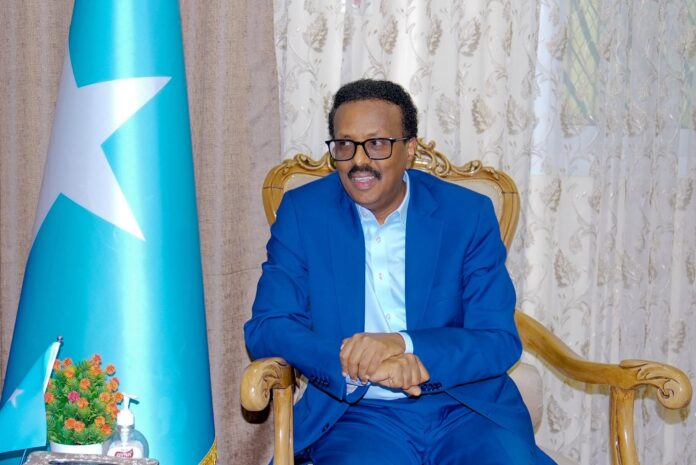
The closed-door talks, described by participants as highly sensitive, are being held at the residence of former President Sheikh Sharif Sheikh Ahmed in Mogadishu. According to sources, the gathering is a direct response to the escalating political standoff between the federal government led by President Hassan Sheikh Mohamud and a coalition of opposition figures.
The opposition, which enjoys the backing of the regional states of Jubbaland and Puntland, has accused the federal administration of failing to establish a transparent and widely accepted electoral framework. With the mandates of key federal institutions now expired, critics argue the country is drifting without a clear constitutional roadmap.
Central to the discussions is the push by President Mohamud to transition Somalia to a universal “one person, one vote” system – a proposal that has sharply divided the political landscape. While the government views the shift as a historic step toward democracy, opponents warn the move could centralise power and destabilise the fragile federal balance.
The opposition has also strongly rejected any attempts to extend the president’s term or delay national polls, arguing such actions would be unconstitutional. In recent days, opposition figures have ramped up political activities in Mogadishu, voicing their opposition to what they describe as unilateral government manoeuvres.
The meeting with the Hawiye elders is widely seen as a strategic move to build grassroots consensus and pressure the government into a negotiated settlement. A communique is expected at the conclusion of the talks, outlining a joint position on how to navigate the transition and avoid a descent into violence.
Somalia is currently at a dangerous political intersection. Beyond the electoral disputes, the country continues to grapple with a devastating humanitarian crisis brought on by severe drought, adding another layer of urgency to the demand for stable governance.
Observers warn that without a swift agreement between the competing factions, the political vacuum could undermine security gains and further complicate efforts to stabilise the Horn of Africa nation.