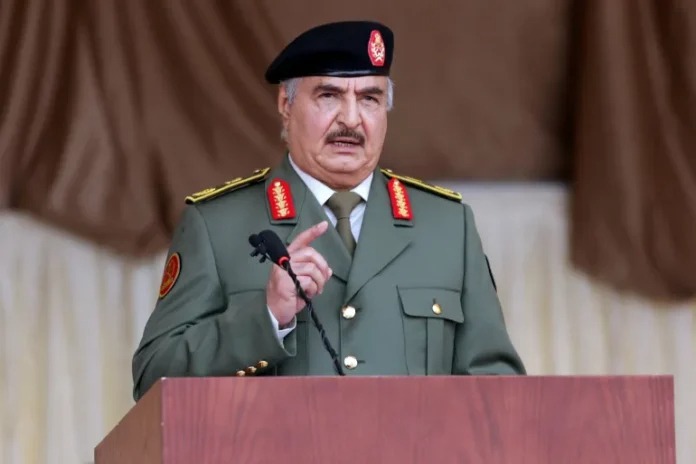
Authorities in eastern Libya have banned the entry of nationals from Sudan, Eritrea, Ethiopia and Somalia, saying the measure is part of efforts to reorganize and regulate the flow of foreign nationals entering the country. A decree issued by the eastern-based administration in Benghazi said citizens of the four countries would be barred from entering Libya through all land, sea and air ports.The administration led by Osama Hamad, which is aligned with military commander Khalifa Haftar and controls eastern and parts of southern Libya, said the move was aimed at better managing migration flows into the North African country.
The internationally recognized government of Prime Minister Abdulhamid Dbeibah is based in the capital Tripoli, while Libya has remained politically divided since rival administrations emerged following years of conflict.
The decree exempts diplomats, consular staff and their families from the restrictions. It also allows entry for workers in the education, health and essential services sectors provided they possess valid permits and employment contracts.
Libya has long served as a major transit route for migrants seeking to reach Europe, particularly since the 2011 uprising that toppled longtime ruler Muammar Gaddafi. The country has faced political fragmentation and insecurity since 2014, complicating efforts to manage migration.
According to the United Nations, more than 900,000 migrants are currently in Libya, many of whom face difficult living conditions amid ongoing instability.
The announcement comes as Libya continues to grapple with deadly migration-related incidents along its Mediterranean coast.
At least 26 people were confirmed dead after a migrant boat sank off eastern Libya last week, according to local authorities. Eleven additional bodies were recovered in recent days along the coast near Tobruk, bringing the death toll to 26, while 10 survivors told rescuers that at least 61 people had been aboard the vessel.
Rescue operations remained ongoing amid fears that more people were missing at sea, with authorities increasing patrols along the Tobruk coastline.
Health officials said many of the recovered bodies were in an advanced state of decomposition after spending prolonged periods in seawater and were buried shortly after recovery.
Libya remains one of the most dangerous migration routes for people from sub-Saharan Africa attempting to reach Europe, with many undertaking perilous journeys across the Sahara Desert and the Mediterranean Sea that often end in tragedy.